Supponiamo di voler eseguire un'operazione di misura di una osservabile A relativa a un sistema quantistico S. Per semplicità e senza ledere la generalità, assumiamo che la predetta osservabile sia 1) compatibile con l'osservabile energia; 2) dotata di spettro puramente discreto non degenere e di cardinalità 2 (si pensi ad un sistema di spin 1/2).
Il sistema sia inizialmente preparato in una sovrapposizione lineare degli autostati di A. Con ovvio significato dei simboli:
ove, come è noto, i coefficienti della combinazione lineare definiscono le ampiezze di probabilità relative a un'operazione di misura eseguita nell'istante iniziale. Dalla compatibilità con l'energia segue che lo stato quanto-meccanico a tutti i tempi è:
As is known, quantum mechanics has highlighted the limits of physical determinism, destroying Laplace's dream about the possibility of predicting the mechanical state of the universe at all times. Incidentally, this paradigm is often metaphorically referred to as the "machine universe model". Otherwise, indeterminism returns an allegorical image very similar to that of a "vast thought" (James Jeans).
Note that these arguments do not imply the untruthfulness of determinism. On the contrary, the latter works very well at macroscopic scales (classical mechanics), while at submicroscopic scales the behavior of matter is governed by the laws of quantum mechanics, well represented by Heisenberg's famous uncertainty principle. Nonetheless, many physicists feel uncomfortable in the presence of an "indeterminate reality": if we cannot know the current quantum mechanical state of the universe, all the more reason we cannot predict its future state. Attempts to recover the "old determinism" therefore remain justified. As is well known, Albert Einstein was a determinist and did not share the ideas of the early quantum physicists. Erwin Schrödinger also had a deterministic vision of reality: the famous equation discovered by the eminent physicist returns a (wave) function that describes the propagation of a wave of matter. Due to some incompatibilities deriving from the discovery of the neutron, Max Born "corrected the shot" through a famous conceptual experiment, introducing the notion of probability wave in place of the matter wave conjectured by Schrödinger and De Broglie (later to be renamed pilot wave by David Bohm).
A more or less recent attempt was made by the English mathematical physicist Roger Penrose, according to which the collapse of the wave function of a quantum-mechanical system is a process of quantum gravity and therefore deterministic. However, it is a hypothesis, in the sense that the English mathematician did not develop a theory in the conventional sense of the term. A surprising consequence of this argument is the quantum origin of "consciousness". For Penrose, in fact, an "act of consciousness" is actually generated by the collapse of the wave function of quantum objects that make up the structure of a nerve cell (neuron). In this way, consciousness is interpreted through a deterministic process due to quantum gravity (Orch-Or Model).
However, the various attempts to recover physical determinism at all costs find no justification, in the sense that indeterminism could be an intrinsic behavior of the universe. Furthermore, the process of measuring a quantum observable is linked to the introspective ability of the experimenter. This inevitably recalls the autopoiesis paradigm of Maturana-Varela or rather its physiological extension to the bioelectrical components of the brain, conjecturing the existence of the neurosome. In this paradigm, the collapse of the wave function of the microtubules which gives rise to the phenomenon of consciousness is not due to effects of quantum gravity, but rather to the autopoietic capacity of the aforementioned bioelectrical components.
Come è noto, la meccanica quantistica ha evidenziato i limiti del determinismo fisico, distruggendo il sogno di Laplace circa la possibilità di prevedere lo stato meccanico dell'universo a tutti i tempi. Incidentalmente, tale paradigma è spesso metaforicamente denominato "modello dell'universo-macchina". Diversamente, l'indeterminismo restituisce un'immagine allegorica molto simile a quella di un "vasto pensiero" (James Jeans).





 Congettura di Riemann
 Trasformata discreta di Fourier
 Trasformata di Fourier nel senso delle distribuzioni
 Trasformata di Fourier
  Infinitesimi ed infiniti
 Limiti notevoli
 Punti di discontinuità
 Misura di Peano Jordan
 Eserciziario sugli integrali
 Differenziabilità
  Differenziabilità (2)
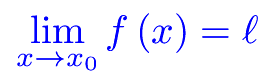 Esercizi sui limiti
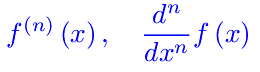 Appunti sulle derivate
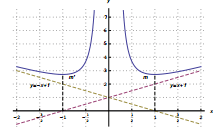 Studio della funzione
 Esercizi sugli integrali indefiniti
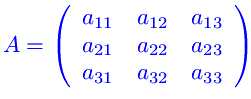 Algebra lineare
 Analisi Matematica 2
 Analisi funzionale
 Entanglement quantistico
 Spazio complesso
 Biliardo di Novikov
 Intro alla Meccanica quantistica
 Entanglement Quantistico