Cold Fusion and Proton Pairs
Aprile 15th, 2026 | by Marcello Colozzo |It's probably a trivial coincidence, but thinking back to the toy model of cold fusion that we worked out It occurred to me that something similar happens in the phenomenon of superconductivity, where instead of proton-proton pairs, we have the famous "Cooper pairs" or a bound electron-electron state. In my case, I had set the eigenvalue of the angular momentum in the relative motion to zero, so as to eliminate the centrifugal potential (which diverges for r->0, like r^(-2)). The exclusion principle does the rest, that is, it "forces" the protons into the spin singlet state (which is actually a Bell state, but that's another story). In fact, consulting Landau (statistical mechanics), on page 199 one reads:

At this point, the mechanism governing the cold fusion process is actually Bose-Einstein condensation. To be more precise, each individual pair of protons, having a total spin of zero, forms a "Bose gas" and as such exhibits the aforementioned degeneracy phenomenon. The only problem is that degeneracy occurs near absolute zero (specifically, below a critical temperature), while cold fusion occurs at room temperature.


 Congettura di Riemann
 Trasformata discreta di Fourier
 Trasformata di Fourier nel senso delle distribuzioni
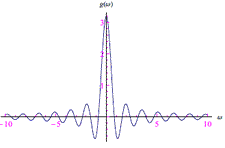 Trasformata di Fourier
  Infinitesimi ed infiniti
 Limiti notevoli
 Punti di discontinuità
 Misura di Peano Jordan
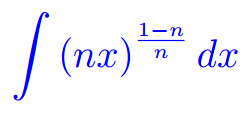 Eserciziario sugli integrali
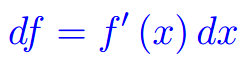 Differenziabilità
 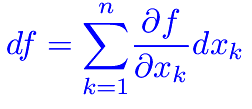 Differenziabilità (2)
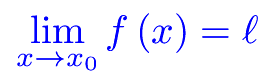 Esercizi sui limiti
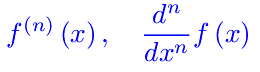 Appunti sulle derivate
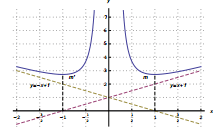 Studio della funzione
 Esercizi sugli integrali indefiniti
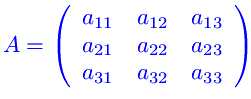 Algebra lineare
 Analisi Matematica 2
 Analisi funzionale
 Entanglement quantistico
 Spazio complesso
 Biliardo di Novikov
 Intro alla Meccanica quantistica
 Entanglement Quantistico