Una metafora: immaginiamo di guardare una duna di sabbia. Se siamo sufficientemente lontani, non ci apparirà la natura "corpuscolare" della duna in quanto composta da granelli di sabbia. Al contrario, tale oggetto ci sembrerà "continuo" e di una forma ben definita. Ma se ci avviciniamo, siamo in grado di percepire la natura granulare della duna, la cui forma ora è inessenziale e ciò che conta è solo la sua "struttura di base" ovvero un insieme di granelli. Se all'improvviso una tempesta distrugge la duna, i suoi componenti ultimi rimangono, e magari si distribuiscono in un nuovo ordine e quindi, in una nuova duna.
In questa metafora, la duna rappresenta lo spaziotempo, mentre i "grani di sabbia" sono i "costituenti fondamentali" di tale ente geometrico. Ma a questo punto è preferibile la denominazione "ente fisico", poiché nell'ebook che proponiamo vedremo che il predetto ente fisico è in realtà, uno stato eccitato di un sistema quantistico noto come "spin networks", introdotto negli anni 50 (e riproposti all'inizio degli anni 70 del secolo scorso) dal fisico-matematico Roger Penrose.
Argomenti di questo e-book (Una breve introduzione agli spin networks di Penrose):
In summary: a Euclidean 3-space "emerges" from a spin network, thanks to a process of fragmentation of the spin network into an uncountable infinity of spin networks. We are in the Newtonian regime, so we could enter a parameter t (time) that runs independently of 3-space. However, it is more reasonable to generalize the previous conclusions in the quantum-relativistic paradigm. In this way we expect as a result of the fragmentation process, a pseudo-Euclidean 4-space or the spacetime of special relativity.
We then established that each vertex of the graph that implements the spin networks is a quantum bit, so it is suggestive to compare this entity to a quantum computer. So a good question is: "Is it possible to Turing such a system?" The answer is a resounding NO, as thinking is a process that occurs over time, while spin networks are inherently aspatial and timeless. In other words, thought requires the usual space-time coordinates. In addition, the "act of thinking" determines a psychological arrow of time equivalent to the thermodynamic arrow of time. A bizarre conclusion could therefore be contained in the obvious answer: «A spin network does not "think", otherwise it would be subject to the second law of thermodynamics».
Riepilogando: da uno spin network "emerge" un 3-spazio euclideo, grazie a un processo di frammentazione della rete di spin in una infinità non numerabile di spin networks. Siamo in regime newtoniano, per cui potremmo inserire un parametro t (tempo) che scorre indipendentemente dal 3-spazio. Tuttavia, è più ragionevole generalizzare le conclusioni precedenti nel paradigma quanto-relativistico. In tal modo ci si aspetta come risultato del processo di frammentazione, un 4-spazio pseudoeuclideo ovvero lo spaziotempo della relatività ristretta.
Another question, perhaps more challenging is: "What are the consequences at the level of the MWI (multi-world configuration) paradigm?". Possible answer: the only effect can be achieved by forcing the collapse of the wave function of the quantum bits that make up the network. Thus, the erased bit is actually saved in a copy of the spin network. In other words, the collapse of a quantum bit is a cloning process of the network itself. The clone-network will in turn determine a pseudo-Euclidean 4-space which implements a new universe. Since there is an uncountable infinity of quantum bits, we will have an equally uncountable infinity of parallel universes convoluted into a single multiverse. The problem that opens up is: «How can the collapse of the wave function be forced?» Attempted answer: in quantum mechanics the collapse of the wave function occurs through a measurement operation by a conscious observer. In the case of a spin network, it is obvious that nobody observes such a system. We are therefore forced to assert that the aforementioned system is self-observing, thus collapsing the wave function of the single quantum bits.
We conclude that spin networks have all the characteristics of a God like object.





 Congettura di Riemann
 Trasformata discreta di Fourier
 Trasformata di Fourier nel senso delle distribuzioni
 Trasformata di Fourier
  Infinitesimi ed infiniti
 Limiti notevoli
 Punti di discontinuità
 Misura di Peano Jordan
 Eserciziario sugli integrali
 Differenziabilità
  Differenziabilità (2)
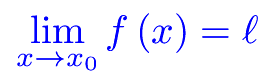 Esercizi sui limiti
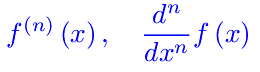 Appunti sulle derivate
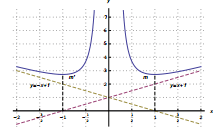 Studio della funzione
 Esercizi sugli integrali indefiniti
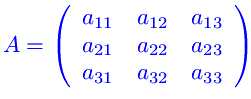 Algebra lineare
 Analisi Matematica 2
 Analisi funzionale
 Entanglement quantistico
 Spazio complesso
 Biliardo di Novikov
 Intro alla Meccanica quantistica
 Entanglement Quantistico