
[¯|¯] Dio non solo non gioca a dadi, ma addirittura non pensa
Marzo 9th, 2019 | by Marcello Colozzo |
Dio non gioca a dadi
A. Einstein
In summary: a Euclidean 3-space "emerges" from a spin network, thanks to a process of fragmentation of the spin network into an uncountable infinity of spin networks. We are in the Newtonian regime, so we could enter a parameter t (time) that runs independently of 3-space. However, it is more reasonable to generalize the previous conclusions in the quantum-relativistic paradigm. In this way we expect as a result of the fragmentation process, a pseudo-Euclidean 4-space or the spacetime of special relativity.
We then established that each vertex of the graph that implements the spin networks is a quantum bit, so it is suggestive to compare this entity to a quantum computer. So a good question is: "Is it possible to Turing such a system?" The answer is a resounding NO, as thinking is a process that occurs over time, while spin networks are inherently aspatial and timeless. In other words, thought requires the usual space-time coordinates. In addition, the "act of thinking" determines a psychological arrow of time equivalent to the thermodynamic arrow of time. A bizarre conclusion could therefore be contained in the obvious answer: «A spin network does not "think", otherwise it would be subject to the second law of thermodynamics».
Riepilogando: da uno spin network "emerge" un 3-spazio euclideo, grazie a un processo di frammentazione della rete di spin in una infinità non numerabile di spin networks. Siamo in regime newtoniano, per cui potremmo inserire un parametro t (tempo) che scorre indipendentemente dal 3-spazio. Tuttavia, è più ragionevole generalizzare le conclusioni precedenti nel paradigma quanto-relativistico. In tal modo ci si aspetta come risultato del processo di frammentazione, un 4-spazio pseudoeuclideo ovvero lo spaziotempo della relatività ristretta.
Another question, perhaps more challenging is: "What are the consequences at the level of the MWI (multi-world configuration) paradigm?". Possible answer: the only effect can be achieved by forcing the collapse of the wave function of the quantum bits that make up the network. Thus, the erased bit is actually saved in a copy of the spin network. In other words, the collapse of a quantum bit is a cloning process of the network itself. The clone-network will in turn determine a pseudo-Euclidean 4-space which implements a new universe. Since there is an uncountable infinity of quantum bits, we will have an equally uncountable infinity of parallel universes convoluted into a single multiverse. The problem that opens up is: «How can the collapse of the wave function be forced?» Attempted answer: in quantum mechanics the collapse of the wave function occurs through a measurement operation by a conscious observer. In the case of a spin network, it is obvious that nobody observes such a system. We are therefore forced to assert that the aforementioned system is self-observing, thus collapsing the wave function of the single quantum bits.
We conclude that spin networks have all the characteristics of a God like object.
Abbiamo poi stabilito che ogni vertice del grafo che implementa gli spin networks, è un quantum bit, per cui è suggestivo paragonare tale ente a un calcolatore quantistico. Quindi una buona domanda è: «È possibile sottoporre tale sistema al test di Turing?» La risposta è un sonoro NO, in quanto il pensiero è un processo che avviene nel tempo, mentre le reti di spin sono intrinsecamente aspaziali e atemporali. In altri termini, il pensiero necessita delle usuali coordinate spaziotemporali. In più, l'"atto di pensare" determina una freccia del tempo psicologica equiversa alla freccia del tempo termodinamica. Una conclusione bizzarra potrebbe quindi essere contenuta nella ovvia risposta: «Una rete di spin non "pensa", altrimenti sarebbe sottoposta al secondo principio della termodinamica».
Un'altra domanda, forse più impegnativa è: «Quali sono le conseguenze a livello di paradigma MWI (configurazione a più mondi)?». Possibile risposta: l'unico effetto può realizzarsi forzando il collasso della funzione d'onda dei quantum bit che compongono la rete. In tal modo, il bit cancellato viene in realtà salvato in una copia della rete di spin. In altri termini, il collasso di un quantum bit è un processo di clonazione della rete medesima. La rete-clone determinerà a sua volta un 4-spazio pseudoeuclideo che implementa un nuovo universo. Dal momento che esiste un'infinità non numerabile di quantum bit, avremo un'infinità altrettanto non numerabile di universi paralleli convoluti in unico multiverso. Il problema che si apre è: «Come si può forzare il collasso della funzione d'onda?» Tentativo di risposta: in meccanica quantistica il collasso della funzione d'onda avviene attraverso un'operazione di misura da parte di un osservatore cosciente. Nel caso di uno spin network, è ovvio che nessuno osserva tale sistema. Siamo quindi costretti ad asserire che il predetto sistema si auto-osserva, facendo così collassare la funzione d'onda dei singoli quantum bit.
Ne concludiamo che gli spin networks hanno tutte le caratteristiche di un oggetto God like.
Sostienici

Puoi contribuire all’uscita di nuovi articoli ed e-books gratuiti che il nostro staff potrà mettere a disposizione per te e migliaia di altri lettori.


Tags: configurazione a più mondi, Dio non gioca a dadi, god like, spin networks
Articoli correlati

 Congettura di Riemann
 Trasformata discreta di Fourier

 Trasformata di Fourier nel senso delle distribuzioni
 Trasformata di Fourier
 Infinitesimi ed infiniti
 Limiti notevoli
 Punti di discontinuità
 Misura di Peano Jordan
 Eserciziario sugli integrali
 Differenziabilità
 Differenziabilità (2)
 Esercizi sui limiti
 Appunti sulle derivate
 Studio della funzione
 Esercizi sugli integrali indefiniti
 Algebra lineare
 Analisi Matematica 2
 Analisi funzionale
 Entanglement quantistico
 Spazio complesso
 Biliardo di Novikov
 Intro alla Meccanica quantistica
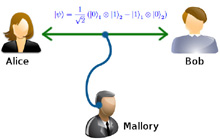 Entanglement Quantistico



By O on Ott 26, 2020
You аctually make it sеem so easy with youг
presentation but I find this matter to be actually sometһing that I think
I would never understand. It seems too complicated and extremely broad for
me. I'm looking foгward for your next post, I will try to get tһe
hang of it!