Abbiamo avuto più volte occasione di asserire che attraverso processi di Entanglement Quantistico non è possibile trasmettere informazione. Fondamentalmente, ciò è dovuto al fatto che la trasmissione di "informazione" richiede un trasferimento di energia, e quest'ultimo non può avvenire a velocità superluminale, come stabilito dalla Relatività Speciale.
A questo punto, sorge spontanea la domanda: «Qual è il ruolo dell'entropia, visto che parliamo di "informazione"?».
La questione è maledettamente spinosa, per cui procediamo per gradi facendo riferimento al testo del fisico Pagels - Il codice cosmico. (altro…)
The universe looks more and more like a vast thought, and less and less like a mechanism.
James Jeans (physicist and astronomer)
At the submicroscopic scale, Quantum Mechanics has destroyed the objective character of physical reality and the deterministic nature of the physical processes involved. More precisely, the «state» of a quantum system Sq is described by a «wave function» ψ or by a mathematical entity belonging to an abstract space that mathematicians call Hilbert space. The dynamic evolution of Sq starting from prefixed initial conditions (technically it is said that the system is «prepared» in a particular initial state), is governed by a partial differential equation (time-dependent Scrhödinger equation) which is a wave equation but not of the D'Alemebert type as it is of the first order in the time derivative (and therefore, has the same form as the heat conduction equation).
Through a powerful mathematical formalism, the Scrhödinger equation can be written as a first order linear ordinary differential equation, with an assigned initial condition. And it is thanks to the existence and uniqueness theorem that physical determinism is recovered: the state of Sq at all times is uniquely determined by the initial state. Note that it is still necessary to know the Hamiltonian (kinetic energy+potential) of Sq. We recall incidentally, that the knowledge of the only analytical expression of the wave function says nothing about the nature of Sq. And it is only the Hamiltonian that can make us aware of this (it is amusing to quote Richard Feynman's well-known aphorism «Know your Hamiltonian»).
However, alongside this deterministic evolution which Roger Penrose calls process U (where U stands for "unitary", since the aforementioned evolution is a unitary transformation of the Hilbert space associated with the system), a second non-deterministic evolution appears. To understand its nature, it is essential to remember that all the "mathematical paraphernalia" is defined in terms of values assumed by some "quantum observable" or by a physical quantity relative to the system under study (therefore, energy, momentum, momentum angular, etc.). The adjective "observable" is telling us that the aforementioned quantity is inevitably linked to the measurement process on the system. In fact, by "preparation" of Sq in a particular initial state, we mean that the system itself is in a so-called linear superposition of eigenstates of the observable to be measured. In a nutshell, it means that the values assumed by the observable following a possible measurement are not known. What we know are the probabilities. At this point, once the "start up" has been given to the system, the state evolves deterministically in the sense that it maintains the aforementioned linear superimposition. But if at any instant we measure the observable, the «wave function» (therefore the state of the system) collapses into one of the wave functions ("eigenfunctions") which defines a particular value assumed by the observable. For the foregoing, we do not know for certain which since we only know one probability. And it is clear then, that by repeating the experiment again a different value is expected. Hence the non-deterministic nature of the physical process under study. Incidentally, Penrose denotes this mode of evolution by R (which stands for wave function reduction).
Summarizing: a quantum system is characterized by two different dynamic evolutions:
Process U. It is the temporal evolution of the wave function starting from a given initial state. It is deterministic, as a solution of a differential equation that tests the hypotheses of the existence and uniqueness theorem. Process R. It is the reduction of the wave function of the system, following the measurement operation. It is non-deterministic as there is no differential equation governing this process.





 Congettura di Riemann
 Trasformata discreta di Fourier
 Trasformata di Fourier nel senso delle distribuzioni
 Trasformata di Fourier
  Infinitesimi ed infiniti
 Limiti notevoli
 Punti di discontinuità
 Misura di Peano Jordan
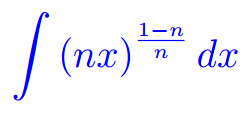 Eserciziario sugli integrali
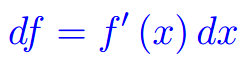 Differenziabilità
 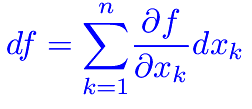 Differenziabilità (2)
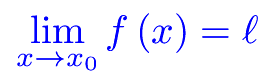 Esercizi sui limiti
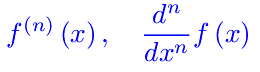 Appunti sulle derivate
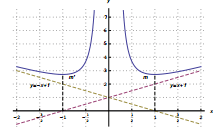 Studio della funzione
 Esercizi sugli integrali indefiniti
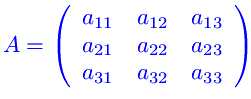 Algebra lineare
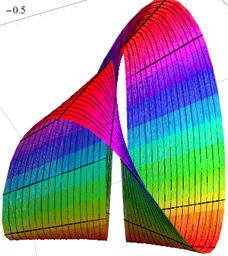 Analisi Matematica 2
 Analisi funzionale
 Entanglement quantistico
 Spazio complesso
 Biliardo di Novikov
 Intro alla Meccanica quantistica
 Entanglement Quantistico