Max Planck was unintentionally a revolutionary. In fact, in dealing with a thorny problem that afflicted physics at the end of the 19th century (the black body emission spectrum) he used a mathematical trick to ensure the convergence of what mathematicians call the "integral generalized". And not only that, his solution was in perfect agreement with the experimental data. "Unfortunately" (for Planck who adhered to the paradigm of classical physics), what he had used was much more than a simple artifice: Nature was revealing something very interesting to us. (altro…)
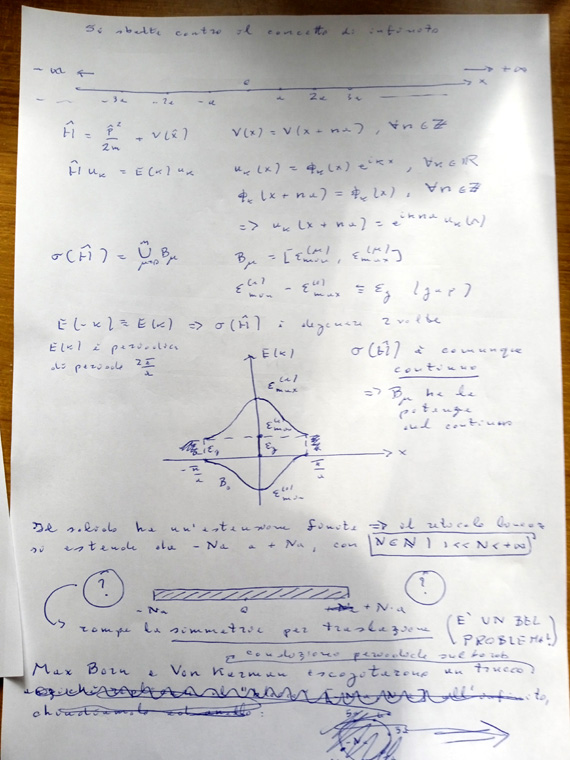
In una trattazione analitica del comportamento di conduttori/semiconduttori si "sbatte" contro il concetto di infinito. Per essere più precisi, la simmetria per traslazione discreta (che è l'ipotesi del celebre teorema di Bloch-Floquet) viene distrutta quando si considera un solido di estensione finita (che è realistico). Come è noto, i fisici teorici Max Born e Von Karman, recuperarono la predetta simmetria attraverso condizioni periodiche al contorno. Si tratta di una periodicità fittizia, e quindi, di un artificio matematico.
Tutto questo può essere comunque giustificato, passando da un reticolo lineare (quale è un solido 1-dim) a un "reticolo a loop":





 Congettura di Riemann
 Trasformata discreta di Fourier
 Trasformata di Fourier nel senso delle distribuzioni
 Trasformata di Fourier
  Infinitesimi ed infiniti
 Limiti notevoli
 Punti di discontinuità
 Misura di Peano Jordan
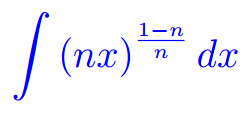 Eserciziario sugli integrali
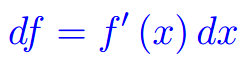 Differenziabilità
 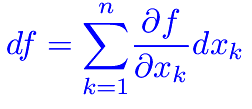 Differenziabilità (2)
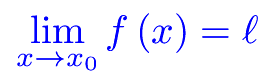 Esercizi sui limiti
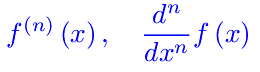 Appunti sulle derivate
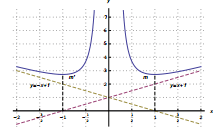 Studio della funzione
 Esercizi sugli integrali indefiniti
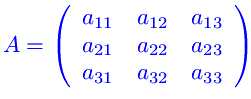 Algebra lineare
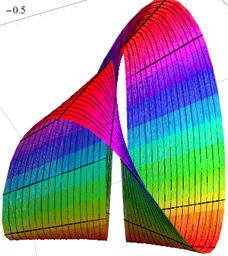 Analisi Matematica 2
 Analisi funzionale
 Entanglement quantistico
 Spazio complesso
 Biliardo di Novikov
 Intro alla Meccanica quantistica
 Entanglement Quantistico