The Riemann zeta function on the critical line
Dicembre 6th, 2022 | by Marcello Colozzo |
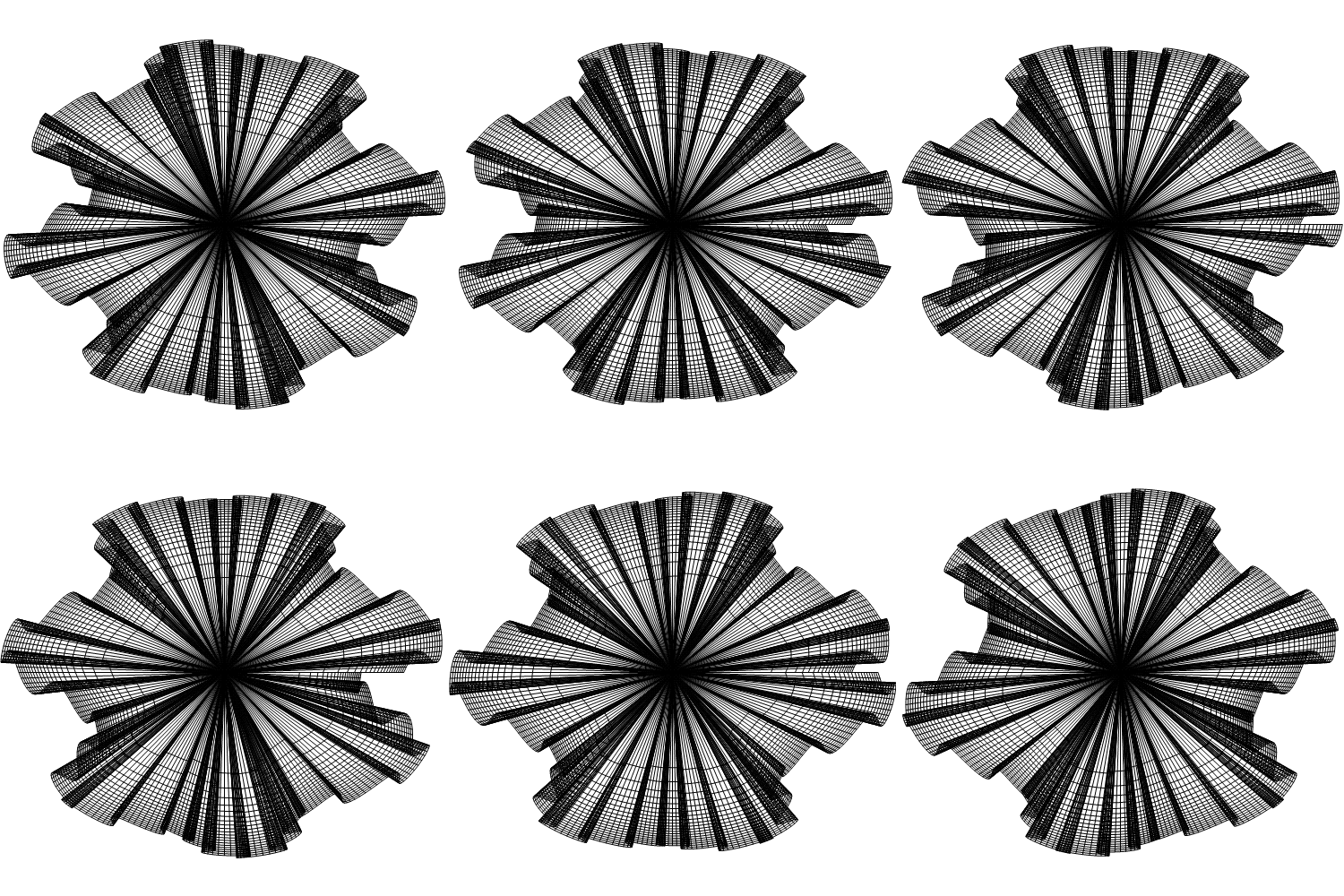
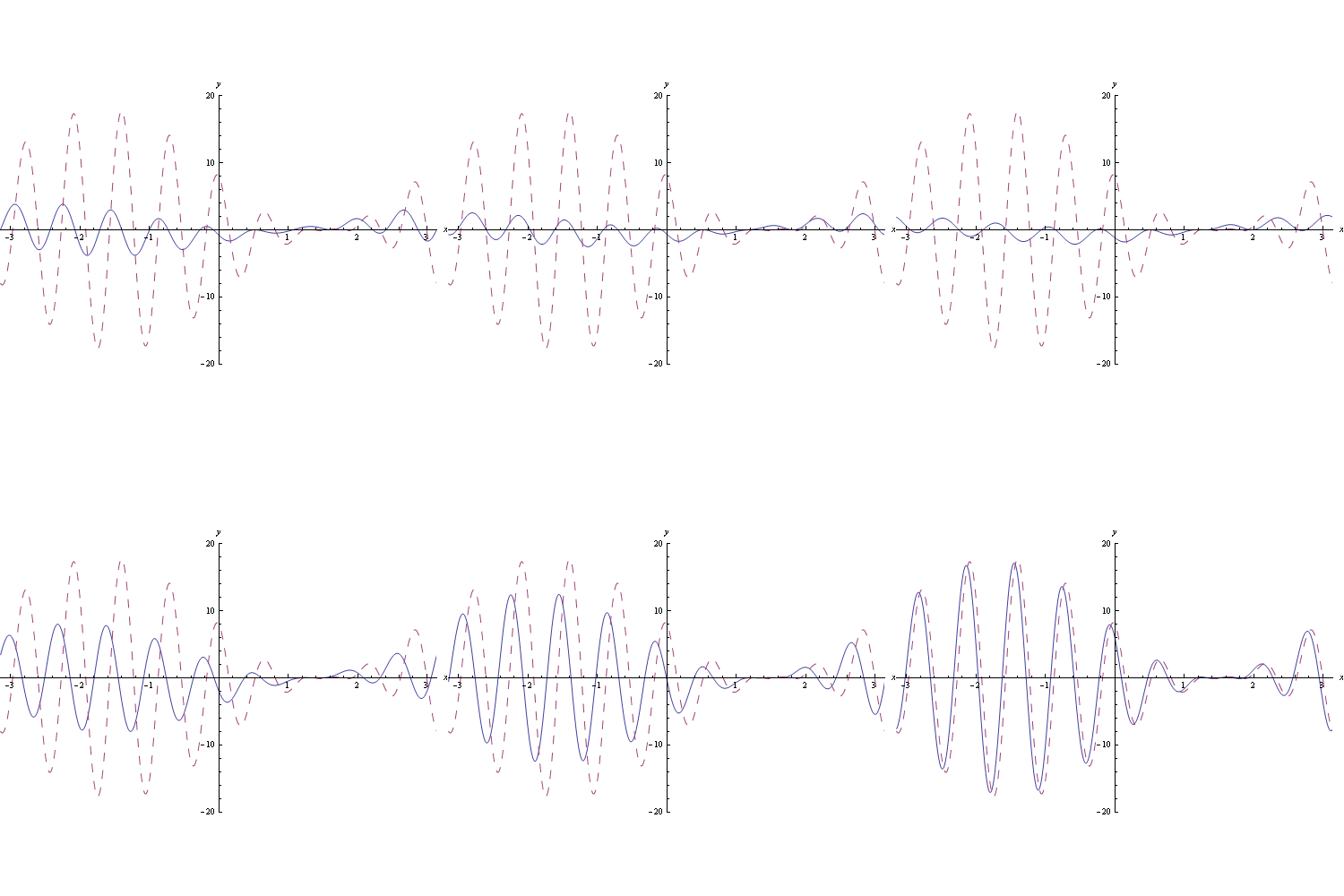
The graphic animation in the figure represents the motion of two balls whose hourly equation is composed of the real part and the imaginary part of the Riemann zeta function calculated on the critical line, changed sign and normalized on its argument.
Let ζ(z) denote the Riemann zeta function. As known

where

being [.] the integer part function. It follows that

is the Fourier transform of u(t). To study the behavior of this real function, let us first focus on [e^t]. Trivially

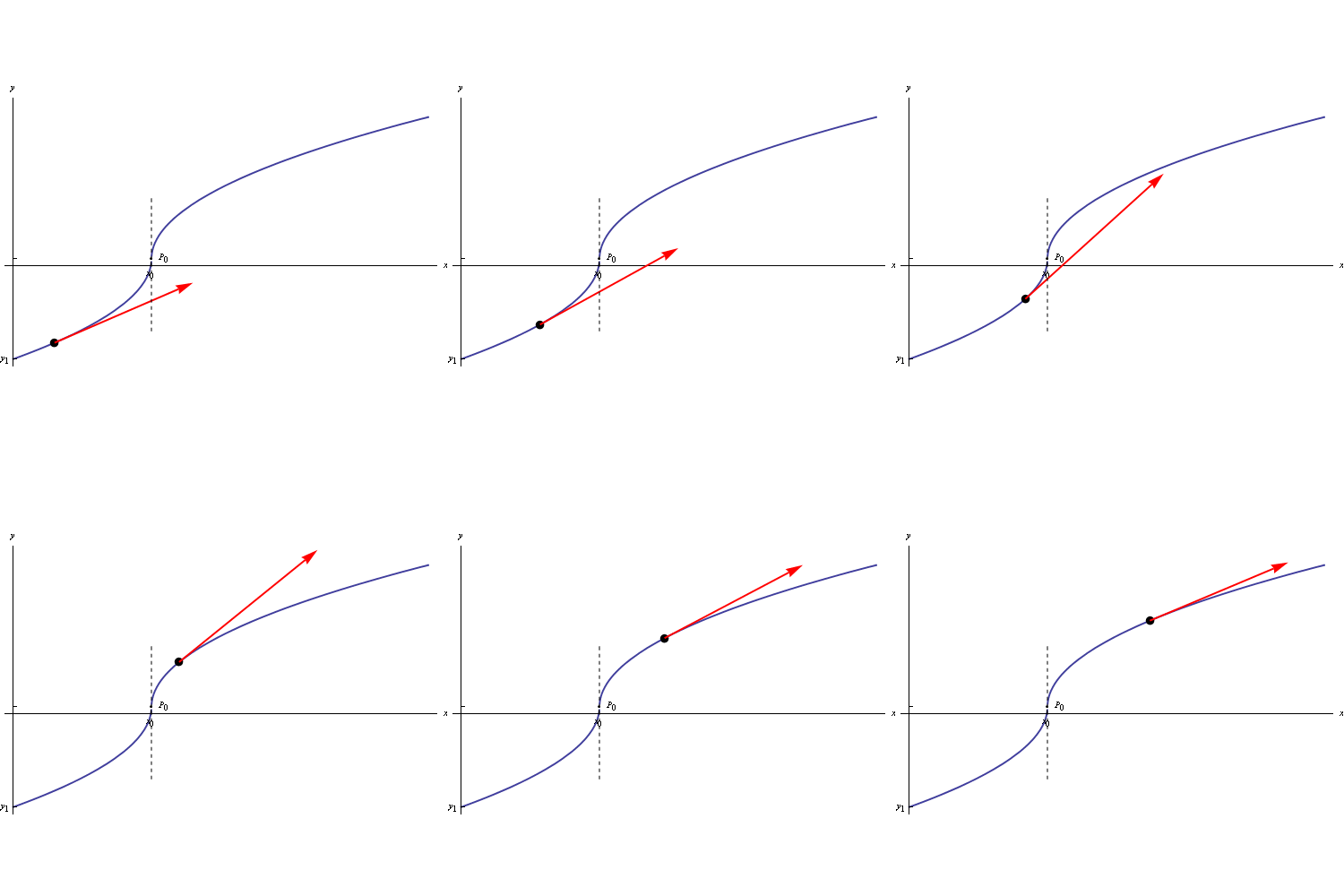
so we find the trend shown in Fig.: the graph is made up of the union of the representative half-line of the unlimited interval (-oo,0) and of a countable infinity of segments of decreasing and infinitesimal length to infinity.

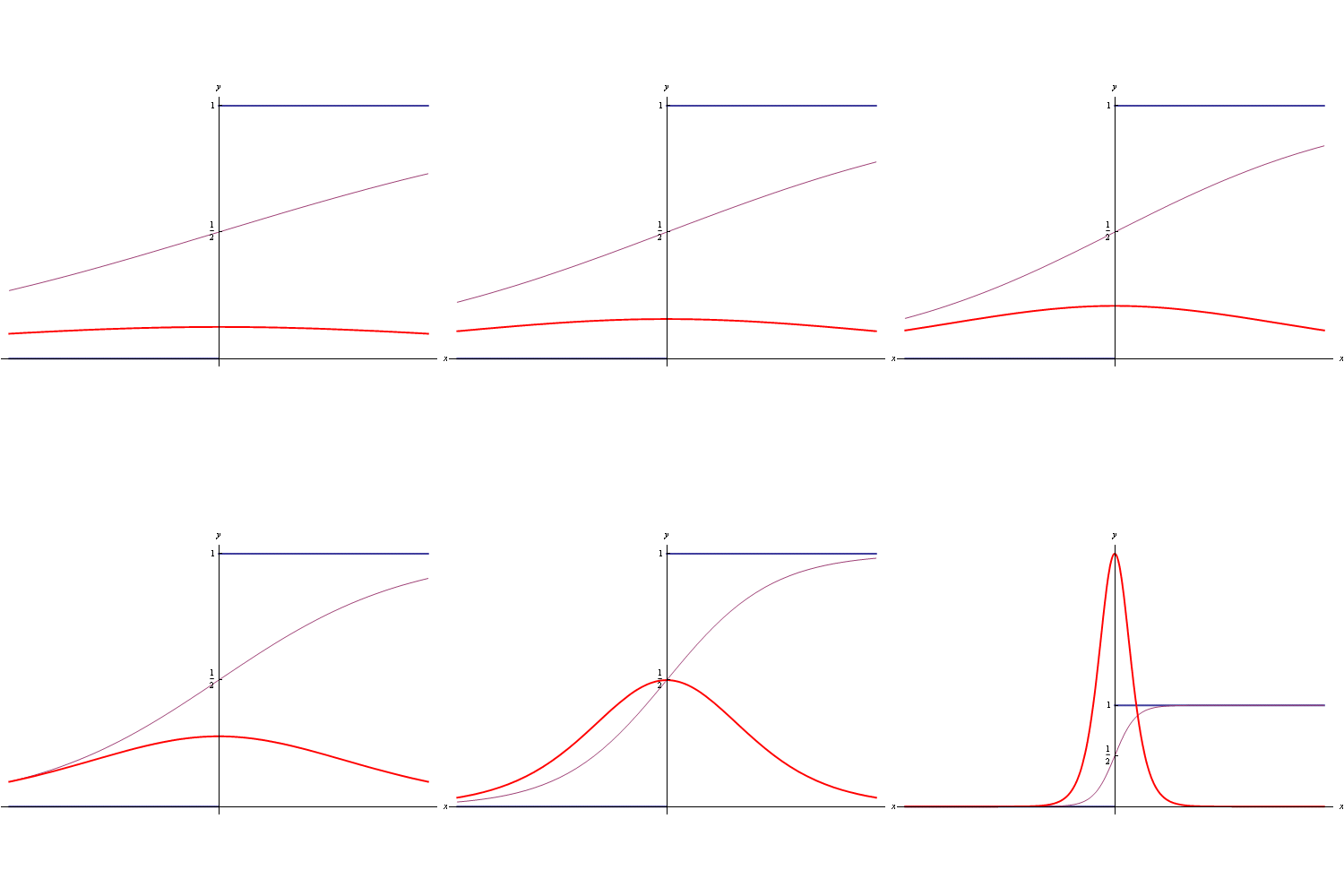
It is easy to understand the trend of the graph of the function e^{-t/2}[e^{t}] which we report in fig.

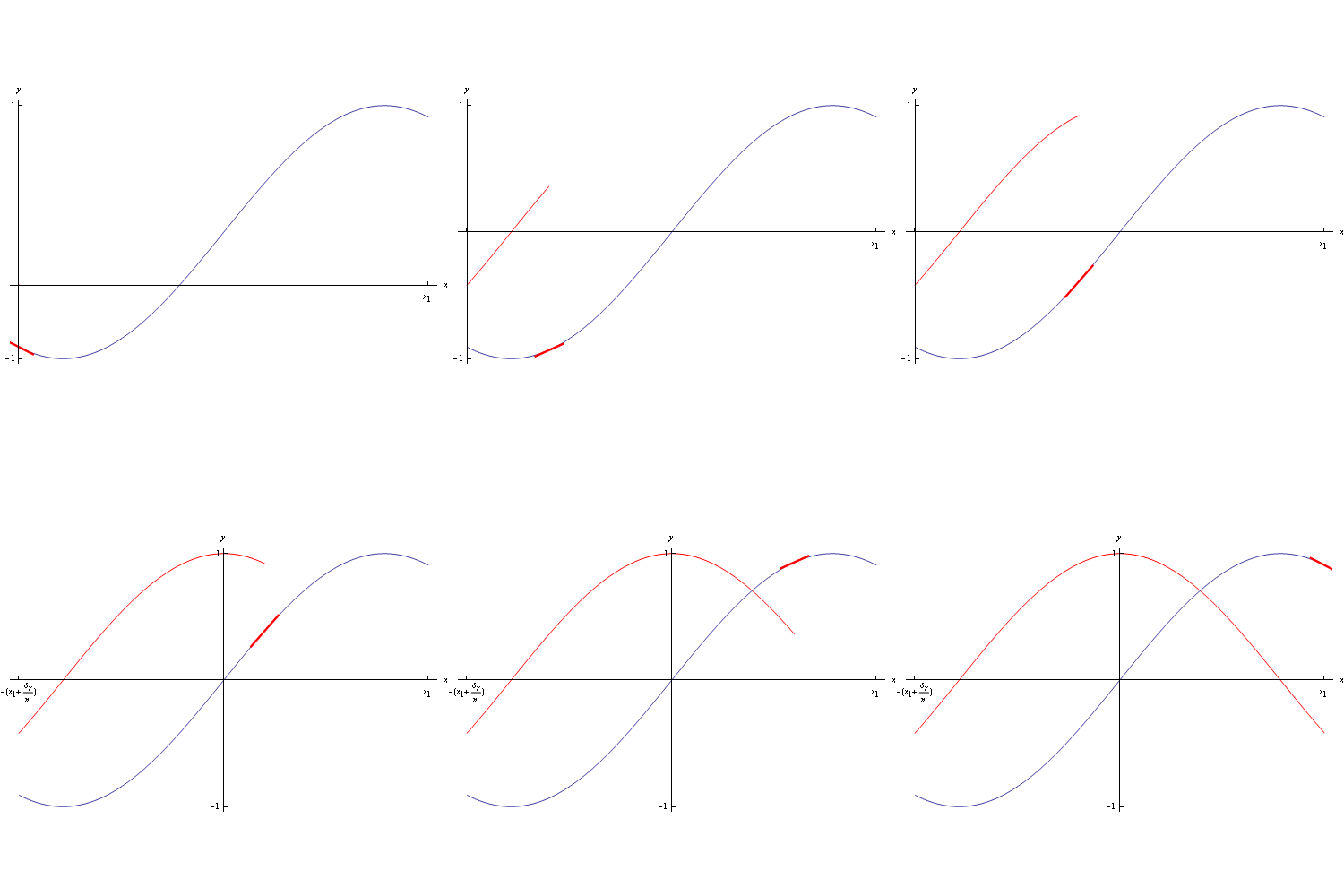
from which we see that the function is divergent for t->+oo. The graph of u(t) is shown in fig.

We therefore note that u(t) is a sawtooth function, where the height of the teeth decreases exponentially.
In fig.

we report the trend of u(t) for t variable from -10 to +10, and this gives the idea of the behavior at infinity. Precisely, the function vanishes exponentially and this guarantees the convergence of the Fourier integral. In fig.

we report the behavior of the modulus of the Fourier transform i.e.




 Congettura di Riemann
 Trasformata discreta di Fourier
 Trasformata di Fourier nel senso delle distribuzioni
 Trasformata di Fourier
  Infinitesimi ed infiniti
 Limiti notevoli
 Punti di discontinuità
 Misura di Peano Jordan
 Eserciziario sugli integrali
 Differenziabilità
  Differenziabilità (2)
 Esercizi sui limiti
 Appunti sulle derivate
 Studio della funzione
 Esercizi sugli integrali indefiniti
 Algebra lineare
 Analisi Matematica 2
 Analisi funzionale
 Entanglement quantistico
 Spazio complesso
 Biliardo di Novikov
 Intro alla Meccanica quantistica
 Entanglement Quantistico