Virus biologici vs Virus informatici
Gennaio 29th, 2021 | by Marcello Colozzo |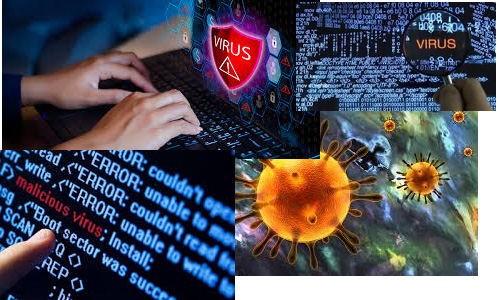
Utilizzando un linguaggio divulgativo: un virus informatico altro non è che un programma. "Prendersi" un virus equivale - inconsapevolmente - ad installare il programma (che verrà poi eseguito). Tale circostanza dipende dal sistema operativo: un virus per Windows non "funziona" per Linux o per Mac, e viceversa.
Un virus biologico è qualcosa di molto più complesso, ma in ultima istanza è un "programma" o meglio, un processo deterministico: non può fare altro che riprodursi utilizzando cellule sane di un tessuto organico di un qualunque organismo vivente (animale, umano, extraterrestre). Tale comportamento è una necessità logica, in quanto a differenza di una cellula un virus biologico non è in grado di autoriprodursi. Utilizzando un linguaggio suggestivo ma efficace, possiamo asserire che un virus è una "cellula mancata". È semplicemente una "macchina molecolare", nel senso che il suo comportamento rientra nel paradigma "meccanicistico" che tra l'altro, caratterizza la fisica classica (in ultima istanza la biologia è basata su tale paradigma, anche se poi sarebbe interessante studiarne il comportamento dal punto di vista quantistico. Approccio problematico, in quanto un virus è un sistema macroscopico nella scala dei processi quantistici).
Nel caso di un virus informatico, il database del software anti-virus dovrà essere aggiornato nel senso che dovrà contenere la cosiddetta firma, ovvero un frammento di codice del programma che compone il virus medesimo. Solo in questo modo sarà in grado di scovarlo e debellarrlo. Tecnicamente, verrà cancellato il file eseguibile nonché le corrispondenti voci del registro del sistema operativo.
Alla stessa maniera, il sistema immunitario di un organismo vivente dovrà essere in grado di riconoscere la "firma" del virus, in modo da produrre gli anticorpi in grado di debellare il virus.
Una differenza sostanziale tra un virus informatico e un virus biologico, risiede nel periodo di incubazione. Tale intervallo di "letargia" è assente nel caso informatico, mentre è di vitale importanza a livello biologico, dal momento che è una strategia di sopravvivenza. In altri termini, il virus sarà in grado di propagarsi utilizzando come vettore gli asintomatici.
Using popular language: a computer virus is nothing more than a program. "Taking" a virus is equivalent - unknowingly - to installing the program (which will then be executed). This circumstance depends on the operating system : a Windows virus does not "work" for Linux or Mac, and vice versa.
A biological virus is something much more complex, but ultimately it is a "program" or rather, a deterministic process: it can only reproduce using healthy cells of an organic tissue of any living organism (animal, human, extraterrestrial). This behavior is a logical necessity, as unlike a cell, a biological virus is unable to reproduce itself. Using suggestive but effective language, we can assert that a virus is a "missing cell". It is simply a "molecular machine", in the sense that its behavior falls within the "mechanistic" paradigm which, among other things, characterizes classical physics (ultimately biology is based on this paradigm, even if it would be interesting to study its behavior from the quantum point of view. Problematic approach, as a virus is a macroscopic system in the scale of quantum processes).
In the case of a computer virus, the anti-virus software database must be updated in the sense that it must contain the so-called signature , which is a fragment of the program that makes up the virus same. Only in this way will he be able to find and defeat it. Technically, the executable file as well as the corresponding operating system registry entries will be deleted.
In the same way, the immune system of a living organism must be able to recognize the "signature" of the virus, in order to produce antibodies capable of eradicating the virus.
A substantial difference between a computer virus and a biological virus lies in the incubation period. This interval of "lethargy" is absent in the computer case, while it is of vital biological importance, since it is a survival strategy. In other words, the virus will be able to spread using the asymptomatic as a vector.
Tags: virus biologici, virus informatici
Articoli correlati

 Congettura di Riemann
 Trasformata discreta di Fourier

 Trasformata di Fourier nel senso delle distribuzioni
 Trasformata di Fourier
 Infinitesimi ed infiniti
 Limiti notevoli
 Punti di discontinuità
 Misura di Peano Jordan
 Eserciziario sugli integrali
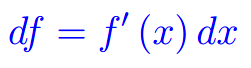 Differenziabilità
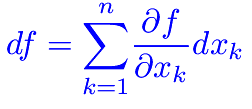 Differenziabilità (2)
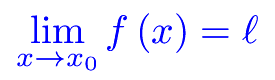 Esercizi sui limiti
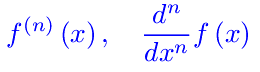 Appunti sulle derivate
 Studio della funzione
 Esercizi sugli integrali indefiniti
 Algebra lineare
 Analisi Matematica 2
 Analisi funzionale
 Entanglement quantistico
 Spazio complesso
 Biliardo di Novikov
 Intro alla Meccanica quantistica
 Entanglement Quantistico