Ipotesi sulla scomparsa di Ettore Majorana
sabato, Febbraio 20th, 2021
Leggendo con attenzione un capitolo del saggio di Leonardo Sciascia è possibile azzardare qualche audace ipotesi sulla misteriosa scomparsa del fisico Ettore Majorana. È però necessaria una premessa. Secondo il prof. David Kaiser autore del libro
Come gli hippie hanno salvato la fisica, nella più positiva delle scienze si è perso il cosiddetto "discorso filosofico". Più precisamente, nella prima metà del secolo scorso fisici del calibro di Albert Einstein, Max Planck ed Erwin Schrödinger, erano altresì impegnati nelle ricadute epistemologiche della fisica. A partire dal dopoguerra la Big Science è esclusivamente orientata alle applicazioni tecnologiche.
Per Majorana, invece, il discorso filosofico era fondamentale (egli era un appassionato del pensiero di Schopenhauer). Al contrario, Fermi e gli altri membri del famoso gruppo di via Panisperna, erano piuttosto pragmatici e legati esclusivamente agli aspetti fisico-matematici delle nuove scoperte.
Ciò premesso, a pag. 49 del libro di Sciascia si parla del viaggio a Lipsia di Majorana il 20 gennaio 1933. Rammentiamo che nel periodo immediatamente precedente il fisico tedesco Werner Heisenberg aveva pubblicato un lavoro sulla struttura nucleare. In breve, egli aveva ipotizzato l'esistenza del neutrone (poi sperimentalmente confermata). Per inciso, Majorana aveva già elaborato una teoria più elegante di quella di Heisenberg ma si rifiutò di pubblicarla nonostante le continue pressioni di Fermi. Partì comunque per Lipsia e strinse un sodalizio (sia pur di breve durata) con il futuro premio nobel per la fisica (Heisenberg). Da scontroso e introverso, con Heisenberg divenne per così dire, estroverso, nel senso che amava "chiacchierare" con il fisico tedesco. Nel saggio Verso una nuova saggezza del fisico F. Capra è riportato un interessante colloquio tra l'autore e Heisenberg, avvenuto negli anni 70. Non si accenna a Majorana, ma al vivo interesse del fisico tedesco per la filosofia, tant'è che un famoso libro di Heisenberg ("Fisica e filosofia") diede l'input a Capra per la stesura del best seller Il Tao della fisica.
Da questa breve analisi emerge chiaramente che Ettore legò con Heisenberg in quanto i due avevano in comune l'interesse per le ricadute filosofiche della fisica. Altri indizi in tal senso emergono dalla lettura de Il caso Majorana del fisico E. Recami: in una delle lettere si accenna a un libro di James Jeans sulla epistemologia della fisica quantistica, che aveva finalmente messo in crisi il paradigma materialistico.
By carefully reading a chapter of Leonardo Sciascia's essay, it is possible to hazard a few bold hypotheses on the mysterious disappearance of the physicist Ettore Majorana. However, a premise is necessary. According to prof. David Kaiser author of the book How the hippies saved physics, the so-called "philosophical discourse" was lost in the most positive of sciences. More precisely, in the first half of the last century physicists of the caliber of Albert Einstein, Max Planck and Erwin Schrödinger were also involved in the epistemological fallout of physics. Since the post-war period, Big Science has been exclusively oriented towards technological applications.
For Majorana, however, the philosophical discourse was fundamental (he was a lover of Schopenhauer's thought). On the contrary, Fermi and the other members of the famous Via Panisperna group were rather pragmatic and tied exclusively to the physical-mathematical aspects of the new discoveries.
That said, on p. 49 of Sciascia's book speaks of Majorana's trip to Leipzig on January 20, 1933. We recall that in the period immediately preceding the German physicist Werner Heisenberg had published a work on the nuclear structure. In short, he had hypothesized the existence of the neutron (later experimentally confirmed). Incidentally, Majorana had already developed a more elegant theory than Heisenberg's but refused to publish it despite Fermi's constant pressure. However, he left for Leipzig and formed a partnership (albeit short-lived) with the future Nobel Prize for physics (Heisenberg). From grumpy and introverted, with Heisenberg he became, so to speak, extroverted, in the sense that he loved to "chat" with the German physicist. In the essay Towards a new wisdom by the physicist F. Capra there is an interesting conversation between the author and Heisenberg, which took place in the 1970s. Heisenberg's famous book ("Physics and Philosophy") gave the input to Capra for writing the best seller The Tao of physics.
From this brief analysis it clearly emerges that Ettore tied with Heisenberg as the two shared an interest in the philosophical implications of physics. Other clues in this sense emerge from the reading of The Majorana case by physicist E. Recami: in one of the letters there is a reference to a book by James Jeans on the epistemology of quantum physics, which had finally put the materialistic paradigm in crisis.



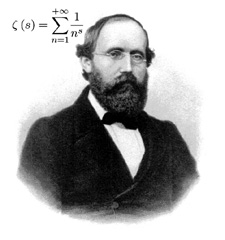 Congettura di Riemann
 Trasformata discreta di Fourier

 Trasformata di Fourier nel senso delle distribuzioni
 Trasformata di Fourier
 Infinitesimi ed infiniti
 Limiti notevoli
 Punti di discontinuità
 Misura di Peano Jordan
 Eserciziario sugli integrali
 Differenziabilità
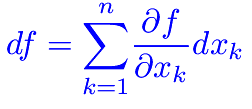 Differenziabilità (2)
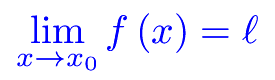 Esercizi sui limiti
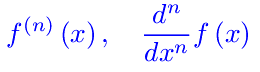 Appunti sulle derivate
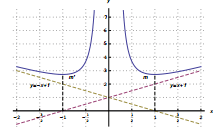 Studio della funzione
 Esercizi sugli integrali indefiniti
 Algebra lineare
 Analisi Matematica 2
 Analisi funzionale
 Entanglement quantistico
 Spazio complesso
 Biliardo di Novikov
 Intro alla Meccanica quantistica
 Entanglement Quantistico